Designing with people
The planning approval for 980 Great West Road, granted in March 2026, might suggest a conventional development story: a site acquired, a scheme designed, an application submitted. But that reading misses the point. The real story began years earlier, not with drawings, but with a series of conversations.
At Hadley, design is not something that happens behind closed doors and is later presented for comment. It is something that is built in public - tested, challenged and shaped through dialogue. Nowhere is that more evident than in the way early vision setting and community co-design informed both the retention and adaptive re-use strategy and the broader environmental ambitions of the scheme.
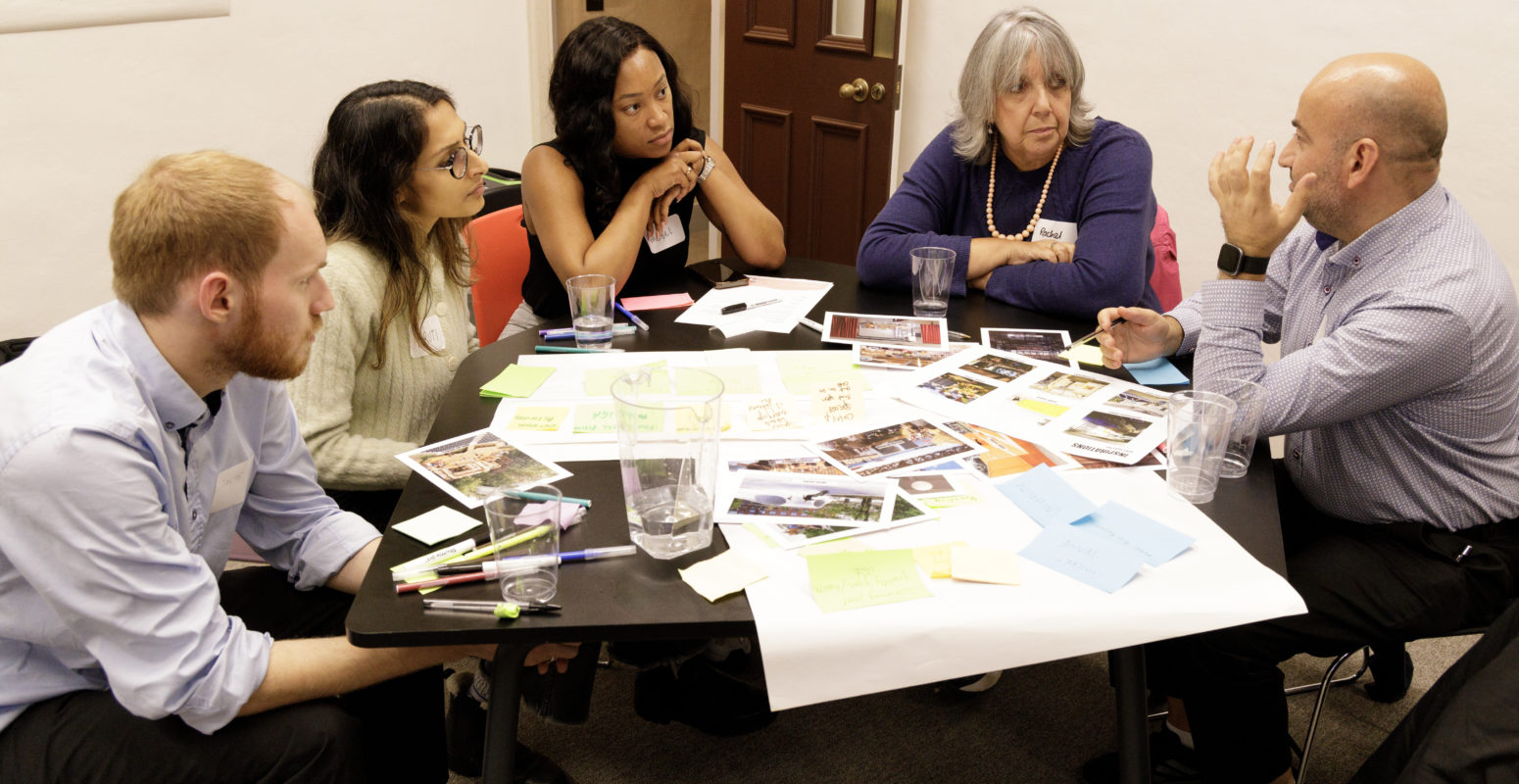
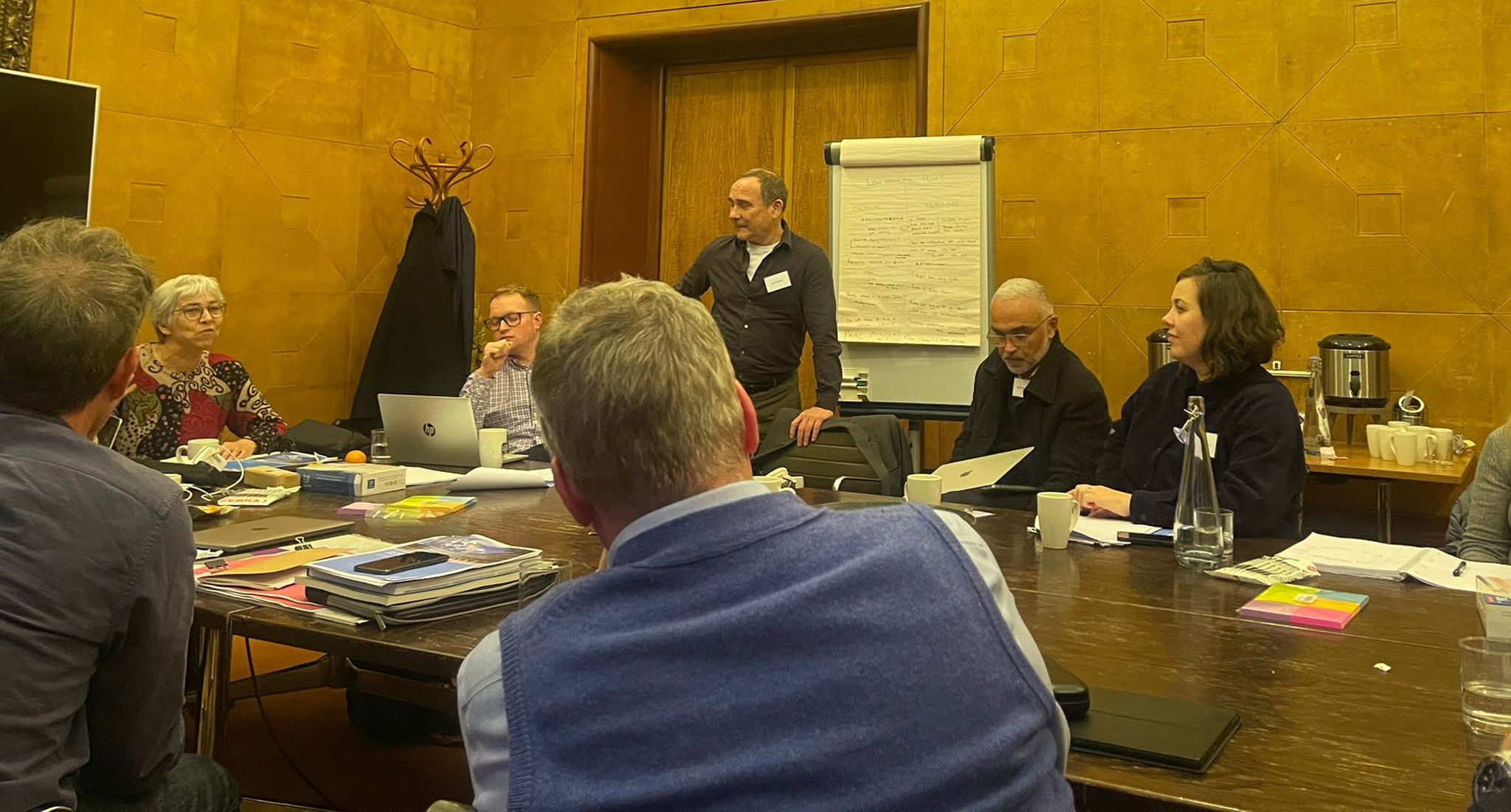
Shortly after acquiring the site, we convened two full days of vision workshops at RIBA. The format was deliberately unconventional. There was no predetermined masterplan (the land deal finalised only two days prior), the sessions truly began with a blank sheet. Participants were carefully curated to create a productive tension of perspectives: local politicians, academics, journalists, community voices and built environment professionals.
These workshops were not intended to be iterative or representative in the way that later community co-design sessions would be, but to establish a clear, early-stage direction from a deliberately broad set of perspectives. The workshops focused on three core themes: community, environment and future-proofing. These are familiar headings in development discourse, but here they were interrogated in depth.
These sessions did more than generate insight - they formed the key themes of the design brief, establishing a high-level vision that was aspirational but also grounded in what could realistically be delivered. What followed was not the product of a single authorial voice, but of a shared and evolving process, where subsequent stages of design development, followed later by structured co-design with the community, introduced increasing levels of detail over time.
From consultation to momentum
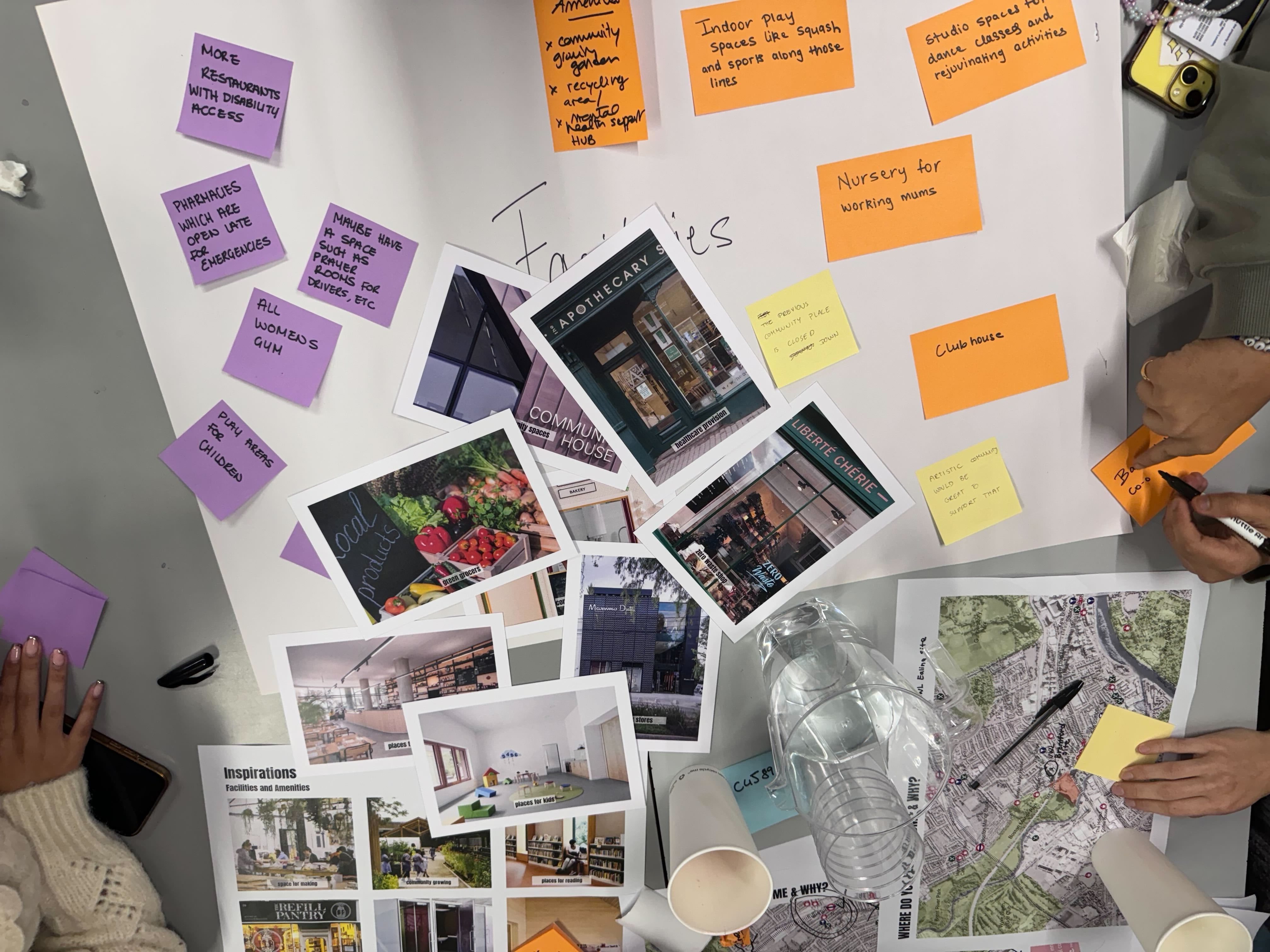
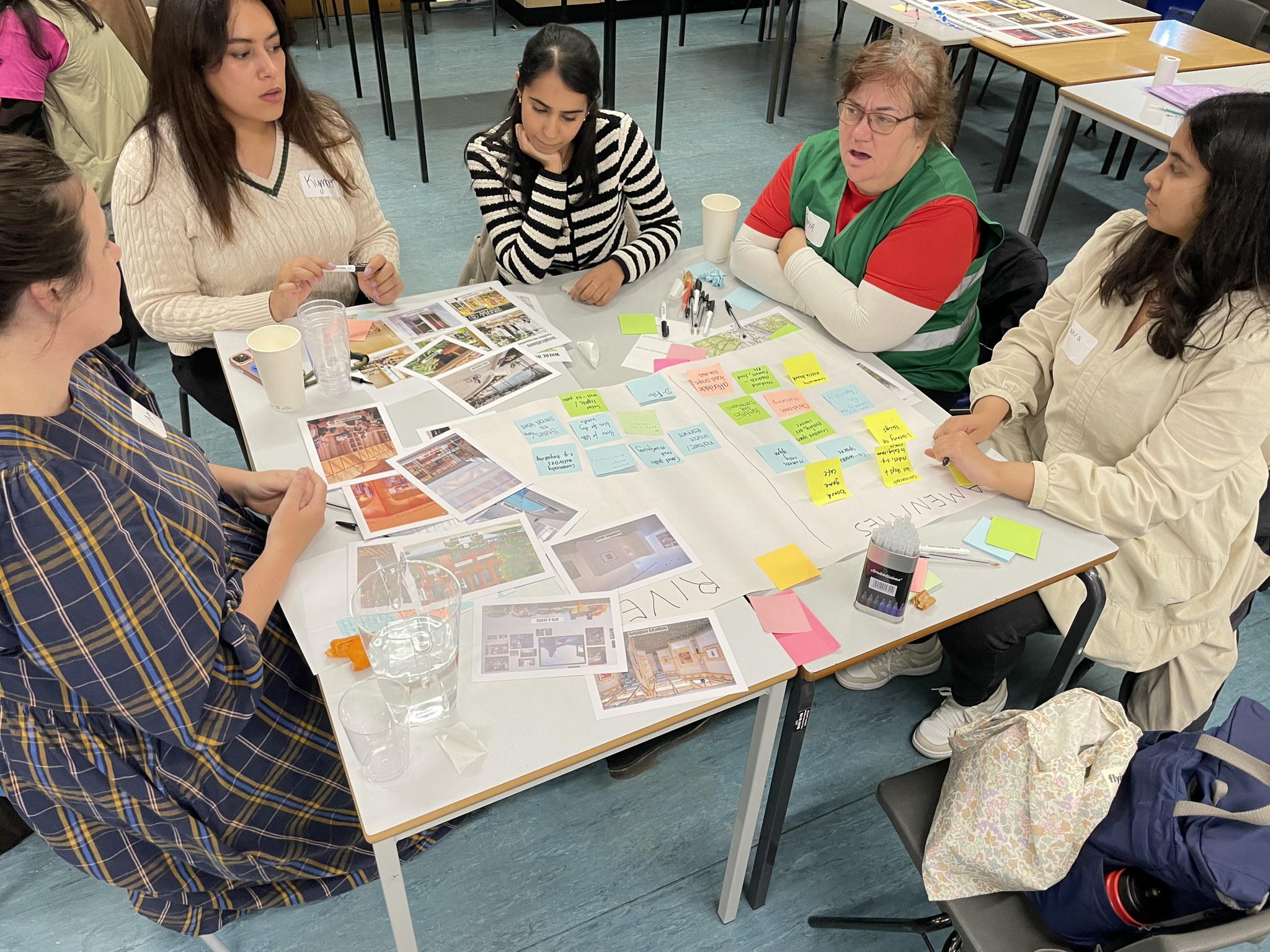
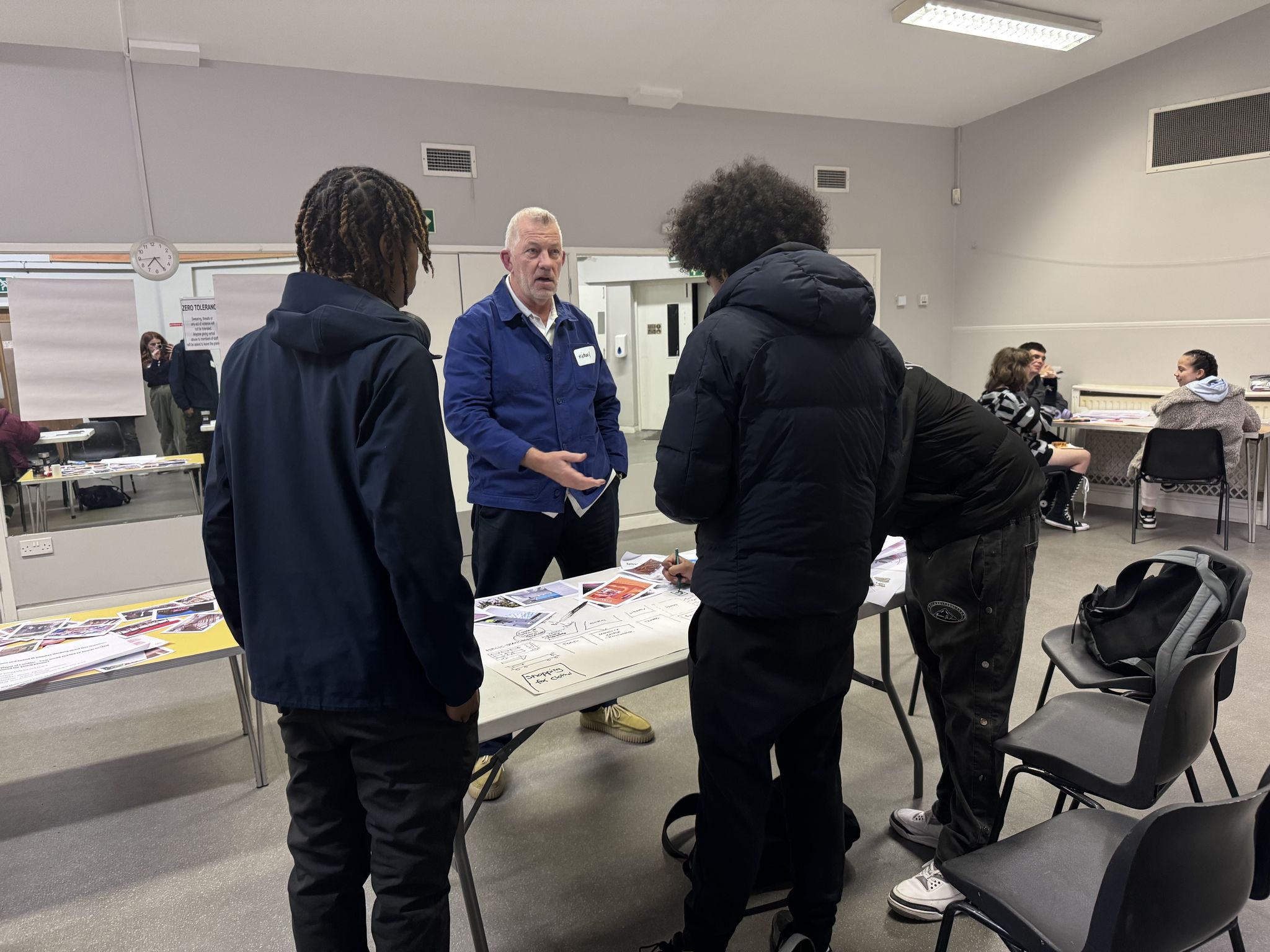
What followed was a separate phase of engagement - focused not on defining the vision, but on testing and shaping it through structured co-design with the local community. The depth of co-design created momentum, aligning stakeholders early, reducing friction later and establishing a shared understanding of what the project was trying to achieve, which in turn enabled a relatively smooth passage through planning, characterised less by opposition and more by informed support.
Participants in these sessions - which were led by Neighbourly Lab - were paid for their time, recognising that meaningful engagement is work rather than gesture. They were also given clarity on what they could and could not influence; the “scope of influence” was defined upfront. That honesty is often rare, and it matters: it builds trust while sharpening the quality of engagement, giving clear parameters for where participants should focus (and where they should look in future to test the impact of their input).
What sits beneath this is not simply process but perspective. Meaningful consultation brings something into the design that cannot be replicated through analysis alone - lived experience. The way a place is understood by the people who inhabit it: its rhythms, its histories, its cultural references, the subtle ways it is used and perceived day to day, offers a form of knowledge that sits beyond the reach of even the most diligent research. Designers, however skilled, inevitably approach a site from the outside; communities understand it from within. When that knowledge is taken seriously, it becomes a design tool in its own right. Local identity, memory and perception are not abstract ideas but tangible reference points that can shape decisions about what to retain, what to transform and what to let go.
This is why the outcomes feel different. When people can see their input reflected in a scheme - when they recognise their own experiences and priorities embedded within it - they are far more likely to engage constructively with the process. Co-design, in this sense, supports the building of legitimacy through a deeper, more grounded understanding of place.
Testing everything: A relentless approach to retention
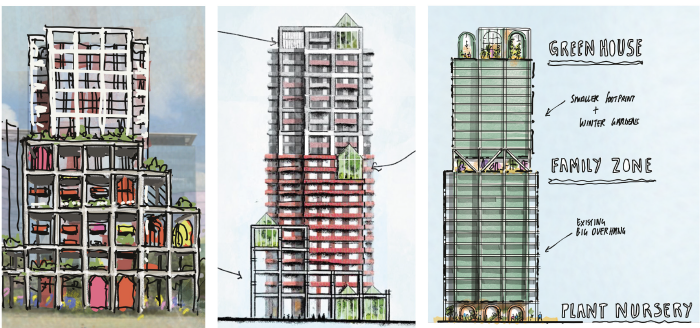
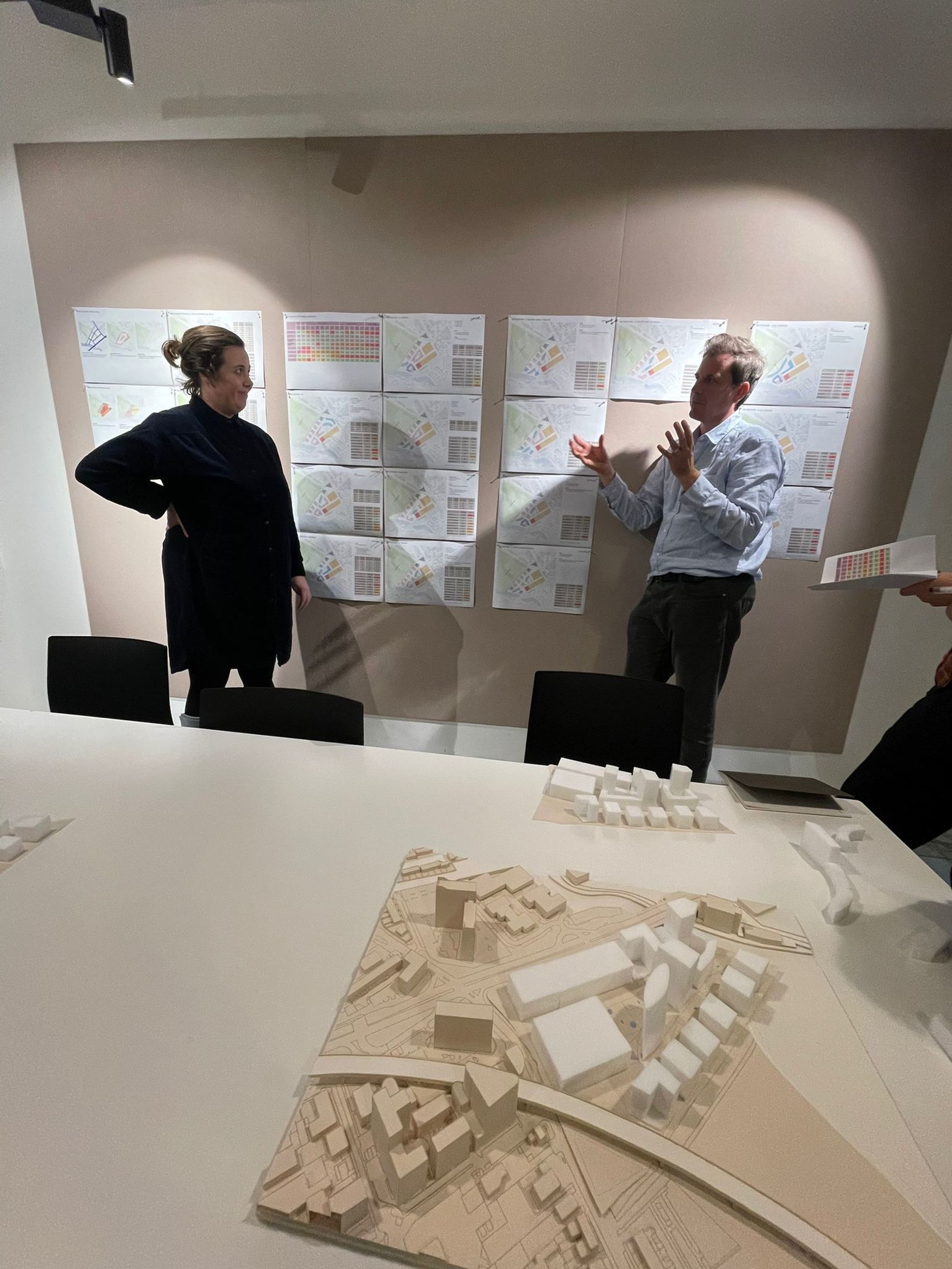
If the workshops established the why, the next phase rigorously interrogated the how. The team, comprising Haworth Tompkins, BuroHappold, and Studio Egret West, tested 128 different retention scenarios across the site- ranging from keeping all existing buildings through to complete demolition. Each option was assessed against a consistent set of criteria: development capacity, site permeability, daylight quality, overlooking, and the proportion of dual-aspect homes.
What emerges from this process is a clear picture of trade-offs. Retaining too much of the existing structure constrained the site - limiting capacity, reducing permeability and, critically, compromising the quality of homes through poor daylight and single-aspect layouts. At the other extreme, removing everything simplified delivery but came at a cost: loss of character, higher embodied carbon, and increased planning risk.
Between these poles sat a more nuanced set of options - those that balanced retention with intervention. These became the focus for further design development. Testing 128 permutations is, in practical terms, an act of due diligence at an urban scale. It demonstrates that the final retention strategy was not a preconceived position, nor a convenient narrative. It was arrived at through elimination, iteration and evidence. In a development landscape where decisions are often presented as inevitabilities, this kind of openness matters. It shows that nothing was taken for granted - and that retention, in this case, is not just principled, but proven.
Retention as a cultural decision
Perhaps the most telling outcome of this process, and the weight given to local memory and perception, is the decision to retain the GSK tower. At the outset, there was no fixed position among us at Hadley on whether the tower should be kept. From a purely technical or commercial perspective, the arguments for and against retention could have gone either way. But through consultation, a different dimension emerged.
The community saw the tower as a landmark - not only in the physical sense, but as a marker of memory and a tangible connection to what the site had been. For many, the GSK tower on the Great West Road has long signalled the return to London, a quiet but enduring presence on the skyline; for others, it held more personal associations, tied to past jobs or those of family members, a place where significant stretches of time had been spent, for better or worse. It was this depth and range of attachment that reframed the discussion. Retention was no longer just a question of carbon or cost; it became a question of identity.
As a result, Plot H evolved into a central element of the masterplan. The planning authority would later describe it as the “bride” of the scheme, a focal point that anchors the wider composition. Importantly, this was not the only retention decision. Much of the retained structure - basements, foundations, substructure - is largely invisible. These elements deliver significant embodied carbon savings and form the backbone of a circular approach to development. But we recognised that retention should also be legible. It should be seen and understood, not just calculated. By retaining the tower we provided that visible expression: it made the principle of reuse tangible.
Designing with continuity
The environmental case for retention is well established, but what this process revealed is that its value runs deeper than carbon alone. Retention offers continuity, allowing new development to acknowledge what came before rather than erase it. And in a global city like London, where change is constant, that continuity carries real weight.
For Hadley, this aligns with a broader approach as a B Corp: one that sits at the intersection of environmental responsibility, community value and long-term economic thinking. Retention is where these priorities meet, reducing impact while reinforcing local identity and supporting a more grounded form of placemaking. What emerges is a different model of development. At 980 Great West Road, that approach has resulted in a scheme that feels more assured: technically rigorous, culturally informed and, importantly, shared.
In the end, the value of co-design is not just in the decisions it produces, but in the relationships it builds. For Hadley, this is aligned with a broader understanding of social value. It is not an add-on or a reporting metric; it is embedded in the way projects are conceived and delivered. It is present in the decision to pay participants, in the honesty about areas of influence, and in the willingness to let the process shape the outcome.
As the built environment grapples with the challenges of decarbonisation, housing need and social equity, these questions of process will become increasingly important. Retention and reuse are often framed as technical challenges. But as 980 Great West Road demonstrates, they are also cultural ones. And the best way to navigate them is not in isolation, but in conversation with the people who know the place best.
What sits beneath this is not simply process but perspective. Meaningful consultation brings something into the design that cannot be replicated through analysis alone - lived experience. The way a place is understood by the people who inhabit it: its rhythms, its histories, its cultural references, the subtle ways it is used and perceived day to day, offers a form of knowledge that sits beyond the reach of even the most diligent research. Designers, however skilled, inevitably approach a site from the outside; communities understand it from within. When that knowledge is taken seriously, it becomes a design tool in its own right. Local identity, memory and perception are not abstract ideas but tangible reference points that can shape decisions about what to retain, what to transform and what to let go.
This is why the outcomes feel different. When people can see their input reflected in a scheme - when they recognise their own experiences and priorities embedded within it - they are far more likely to engage constructively with the process. Co-design, in this sense, supports the building of legitimacy through a deeper, more grounded understanding of place.
Testing everything: A relentless approach to retention
If the workshops established the why, the next phase rigorously interrogated the how. The team, comprising Haworth Tompkins, BuroHappold, and Studio Egret West, tested 128 different retention scenarios across the site- ranging from keeping all existing buildings through to complete demolition. Each option was assessed against a consistent set of criteria: development capacity, site permeability, daylight quality, overlooking, and the proportion of dual-aspect homes.
What emerges from this process is a clear picture of trade-offs. Retaining too much of the existing structure constrained the site - limiting capacity, reducing permeability and, critically, compromising the quality of homes through poor daylight and single-aspect layouts. At the other extreme, removing everything simplified delivery but came at a cost: loss of character, higher embodied carbon, and increased planning risk.
Between these poles sat a more nuanced set of options - those that balanced retention with intervention. These became the focus for further design development. Testing 128 permutations is, in practical terms, an act of due diligence at an urban scale. It demonstrates that the final retention strategy was not a preconceived position, nor a convenient narrative. It was arrived at through elimination, iteration and evidence. In a development landscape where decisions are often presented as inevitabilities, this kind of openness matters. It shows that nothing was taken for granted - and that retention, in this case, is not just principled, but proven.
Retention as a cultural decision
Perhaps the most telling outcome of this process, and the weight given to local memory and perception, is the decision to retain the GSK tower. At the outset, there was no fixed position among us at Hadley on whether the tower should be kept. From a purely technical or commercial perspective, the arguments for and against retention could have gone either way. But through consultation, a different dimension emerged.
The community saw the tower as a landmark - not only in the physical sense, but as a marker of memory and a tangible connection to what the site had been. For many, the GSK tower on the Great West Road has long signalled the return to London, a quiet but enduring presence on the skyline; for others, it held more personal associations, tied to past jobs or those of family members, a place where significant stretches of time had been spent, for better or worse. It was this depth and range of attachment that reframed the discussion. Retention was no longer just a question of carbon or cost; it became a question of identity.
As a result, Plot H evolved into a central element of the masterplan. The planning authority would later describe it as the “bride” of the scheme, a focal point that anchors the wider composition. Importantly, this was not the only retention decision. Much of the retained structure - basements, foundations, substructure - is largely invisible. These elements deliver significant embodied carbon savings and form the backbone of a circular approach to development. But we recognised that retention should also be legible. It should be seen and understood, not just calculated. By retaining the tower we provided that visible expression: it made the principle of reuse tangible.